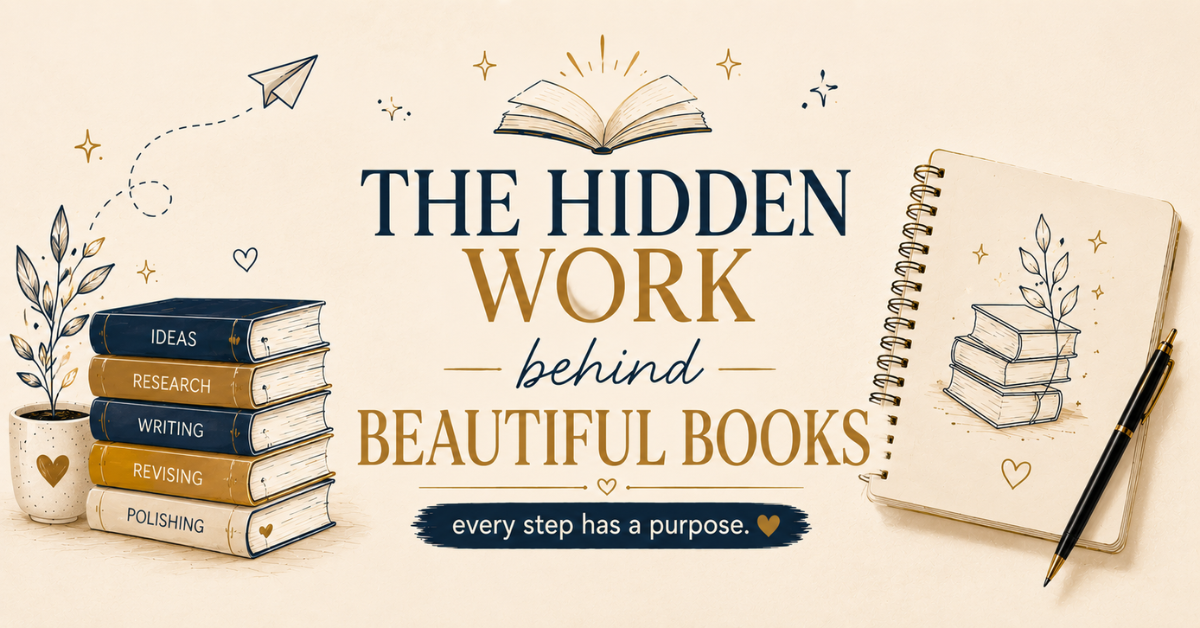

Overview of My Formatting Journey
Most authors think formatting is the last step. I learned it’s the first test of whether a book will survive.
It was during my undergraduate years that I realized formatting was more than just a technical requirement. It was buried under a stack of research papers, thesis drafts, and strict academic guidelines. My professors did not just grade content. They graded the presentations.
Margins had to be exact. Line spacing had to be consistent. Page numbering, heading hierarchies, and citation formats were non-negotiable. I spent countless nights aligning tables, fixing broken cross-references, and adjusting indentation until the document felt structurally sound.
At the time, I thought it was simply academic rigor. I did not know it was the beginning of everything I would come to understand about structure, precision, and the invisible work that makes a book feel right.
How I Unlearned Everything Academia Taught Me?
When I graduated and began formatting books for authors, I quickly realized that academic formatting and professional book layout operate on entirely different philosophies. In college, the goal was compliance and uniformity. In publishing, the goal is readability, pacing, and invisible design.
I had to unlearn the rigid expectations of academic templates and start thinking like a typographer. I spent months studying industry standards, testing export settings across Kindle, IngramSpark, and Apple Books, and learning how reflowable EPUBs behave differently on every device.
What began as a skill forged in student assignments slowly evolved into a professional practice built entirely around reader experience. That transition changed how I thought about every page I touched.
Mistakes That Shaped My Skills
The transition was not seamless. My early professional projects came with steep learning curves that no tutorial had fully prepared me for.
I submitted files that looked flawless on my monitor but collapsed on e-readers. I miscalculated gutter margins for thick paperbacks, causing text to vanish into the spine.
I learned the hard way that platform specifications are not suggestions, and that “approved” does not always mean “print-ready”.
Each mistake became a lesson in precision. I started treating every manuscript like an architectural blueprint, mapping out typography, spacing, and navigation before touching a single paragraph. I built validation routines, cross-referenced trim-size requirements, and adopted a workflow that prioritized consistency over decoration.
Good layout does not announce itself. It simply gets out of the way so the author’s voice can breathe.
Formatting Is a Chain of Trust
As design legend Massimo Vignelli often emphasized, good design fights friction.
In book formatting, this fight is against friction. Against the tiny decision that pulls a reader out of the story. Against the margin that pinches the eye. Against the chapter header that doesn’t quite feel right, but nobody can say why. And that fight builds trust.
Formatting for others has taught me that publishing is fundamentally a chain of trust. An author hands over years of work, often their most vulnerable words, and expects them to be treated with care. The formatter’s job is not to redesign their story, but to protect it through structure.
I learned to read technical guidelines such as contracts, to anticipate how a platform’s compression engine will affect image quality, and to understand why a single broken table-of-contents link can derail a launch.
I also learned that professionalism in this space is measured in quite detail. The exact point size that balances readability with page economy, the leading that prevents eye fatigue, the hyphenation settings that eliminate jarring gaps in justified text, and the discipline of always ordering a physical proof before declaring a file complete.
These are not glamorous choices, but they are the difference between a book that feels rushed and one that belongs on a traditional shelf.
Why Does DIY Formatting Cost More Than People Expect?
Perhaps the most valuable lesson has been recognizing the true economics of time and expertise. Early on, I watched authors attempt to format their own books using generic templates, only to spend weeks troubleshooting errors that a trained eye could resolve in hours.
I realized that formatting is not about making pages look pretty. It is about building compliant, accessible, and device-agnostic files that survive the publishing ecosystem.
The money saved by doing it yourself is real. But the time it costs to watch tutorials, investigate errors, file submissions, and deal with proofs that come back wrong is also real. And for a writer, time is the one resource you never get back.
Modern Tools Helpful In Book Formatting
Modern tools like Atticus, Vellum, and Adobe InDesign have democratized access to professional layout, but they cannot replace typographic literacy or platform fluency.
Resources like Joel Friedlander’s The Book Designer, Robert Bringhurst’s The Elements of Typographic Style, and official KDP and IngramSpark specification guides remain essential for anyone serious about quality.
Validation through EPUBCheck and Kindle Previewer is no longer optional. It is the baseline for credibility. Testing across multiple devices before submission is not an extra effort. It is the job.
Conclusion
Looking back, my journey from graduation assignments to professional book formatting has been less about software mastery and more about mindset. I learned that precision is a form of respect. That consistency is what readers actually feel, even if they cannot name it.
Publishing is not a single event, but a series of deliberate, interconnected choices, and formatting sits at the center of that process.
Every clean file I deliver, every first-time platform approval, and every author who emails back to say the interior finally matches their vision reinforces why this work matters.
Formatting taught me that the invisible details are often the most important ones. It taught me that a book is not finished when the last word is written, but when the last page is structured to be read. And it taught me that my role is not to claim the story, but to prepare it for the world.
For anyone entering this space, whether as an author or a formatter, the path forward remains the same. Study the standards, respect the specifications, test relentlessly, and never confuse decoration with design.
The tools will change. The platforms will update. But the core principle does not. Readers do not experience our effort, they experience the result. Make sure it arrives ready.